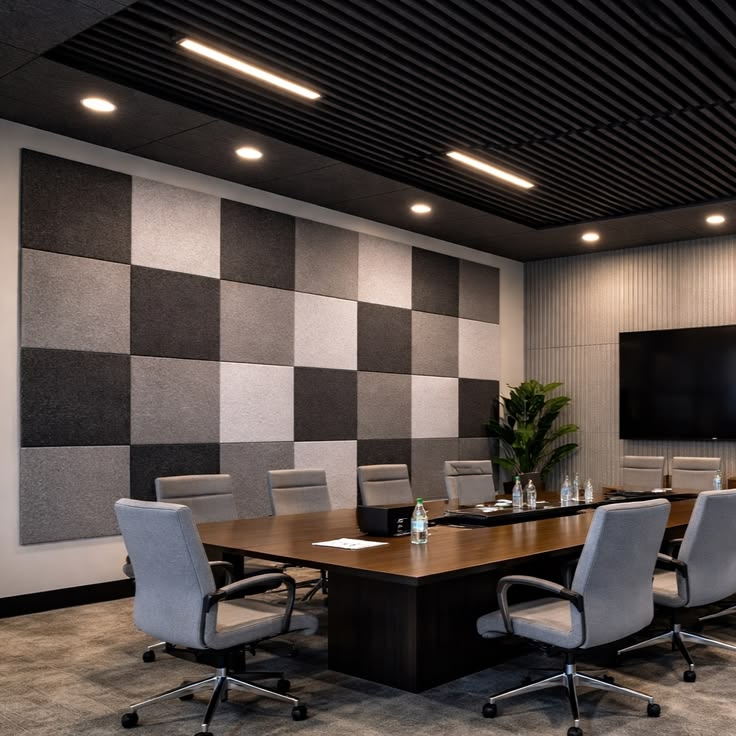
“A meeting room should make conversations easier, not harder. Good acoustics help people hear clearly, protect confidential discussions and make both in-person and virtual meetings more productive.” Estimated cost: Acoustic treatment for an office meeting room in Kenya typically starts from KES 2,000–4,500+ per m² for gypsum ceilings with bulkheads or lighting, while acoustic partitions may range from KES 5,200–10,000+ per m² for acoustic gypsum systems to KES 18,000–30,000+ per m² for double-glazed acoustic systems.
A complete acoustic meeting-room upgrade may therefore require a planning budget of KES 300,000–1.5 million+, depending on room size and specification.
Office meeting rooms need to support clear conversations, confidentiality, presentations and video calls. However, poor acoustics can make speech difficult to understand, create distracting echo and allow conversations to travel into adjacent rooms.
These problems are common in offices with glass partitions, hard floors, large windows and open layouts. A room may look professionally designed but still perform poorly if sound absorption and sound insulation have not been considered.
Office Interiors Kenya supplies and installs gypsum and acoustic ceiling solutions for offices and commercial spaces. The company also provides partitioning and flooring solutions that can form part of a coordinated acoustic design. Explore the office interior design and fit-out services to see how these elements can be planned together.
Why Do Office Meeting Rooms Need Acoustic Treatment?
Meeting rooms serve different purposes, but they all depend on good communication. Poor acoustics can affect the quality of discussions and make it difficult for employees and visitors to follow conversations.
Acoustic treatment helps address several issues.
1. Echo and Reverberation
Echo occurs when sound reflects off hard surfaces such as glass, concrete, tiles and bare walls. In a room with limited sound-absorbing materials, voices can become difficult to distinguish.
Acoustic ceilings, wall panels, carpet flooring and upholstered furniture help absorb reflected sound and improve speech clarity.
2. Speech Clarity
People should be able to hear and understand one another without repeatedly asking for information to be repeated. This is particularly important during presentations, training sessions and virtual meetings.
3. Privacy Between Adjacent Rooms
Meeting rooms used for interviews, HR discussions, management meetings and client consultations may require sound insulation to reduce conversations travelling into neighbouring areas.
4. Noise From Open-Plan Areas
A meeting room beside a busy workstation area, reception or corridor may be affected by external noise. Suitable partitions, doors and seals can help reduce sound transfer.
5. Audio Quality During Virtual Meetings
Video calls require clear speech and manageable background noise. Excessive reverberation can make voices sound distant or unclear, even when the meeting room has good conferencing equipment.
Sound Absorption vs Sound Insulation: What Is the Difference?
These two concepts are often confused, but they solve different acoustic problems.
| Acoustic approach | What it does | Common solutions |
|---|---|---|
| Sound absorption | Reduces sound reflections and echo inside a room | Acoustic ceiling tiles, wall panels and carpet |
| Sound insulation | Reduces sound travelling between rooms | Acoustic partitions, insulated walls, sealed doors and joints |
A meeting room may need both. Acoustic ceiling tiles can reduce echo inside the room, but they will not automatically prevent conversations from travelling through a poorly sealed partition.
For more detailed guidance, read our article on how to soundproof an office meeting room in Kenya.
Best Acoustic Solutions for Office Meeting Rooms
1. Acoustic Ceiling Tiles
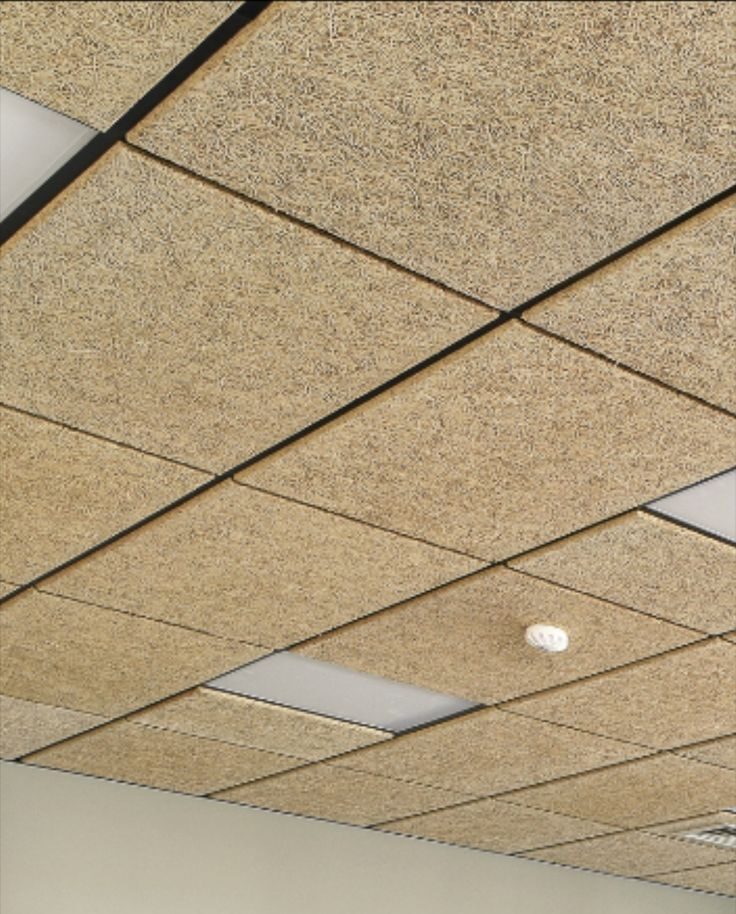
Acoustic ceiling tiles absorb sound and reduce reverberation. They are suitable for meeting rooms, boardrooms, call centres, training rooms and open-plan offices.
They work best when combined with soft flooring, upholstered furniture and acoustic wall treatment.
When selecting a ceiling system, consider the ceiling height, lighting layout, ventilation requirements and the room’s intended use. The ceiling should also be coordinated with the partition layout to avoid leaving untreated gaps that affect performance.
Explore office ceiling and fit-out solutions when planning a complete meeting-room upgrade.
2. Acoustic Gypsum Partitions
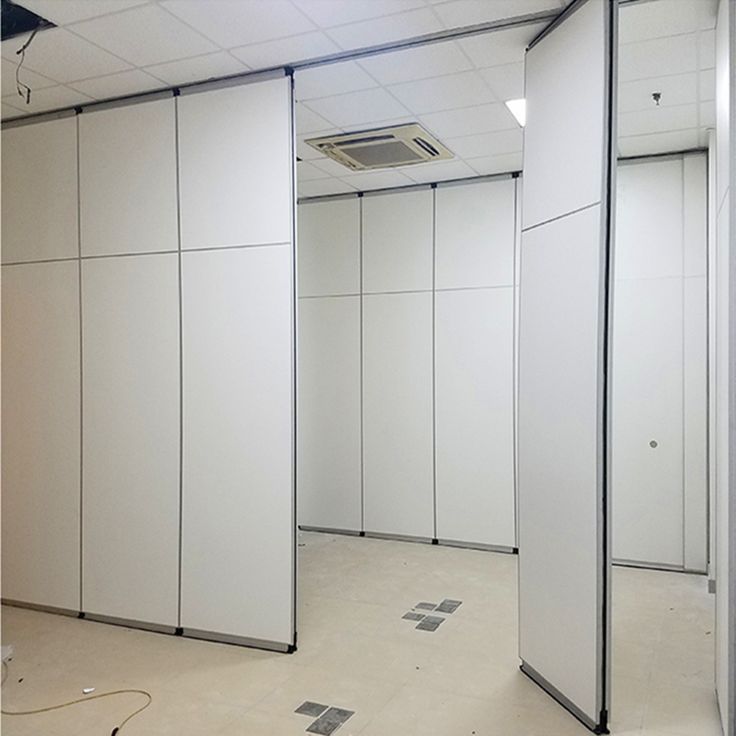
Acoustic gypsum partitions use suitable board layers, insulation, seals and construction details to reduce sound transfer between rooms.
They are useful for:
- HR offices.
- Consultation rooms.
- Management offices.
- Confidential meeting rooms.
- Interview rooms.
Office Interiors Kenya estimates acoustic gypsum partitions at KES 5,200–10,000+ per m², depending on the specification.
The performance depends on the complete wall assembly, including the boards, insulation, joints, ceiling junctions and door openings. A partition should be specified according to the level of privacy required rather than selected on appearance alone.
If you are comparing solid and glazed options, our guide to creating private meeting rooms in an open-plan office explains where different partition types are suitable.
3. Double-Glazed Acoustic Partitions
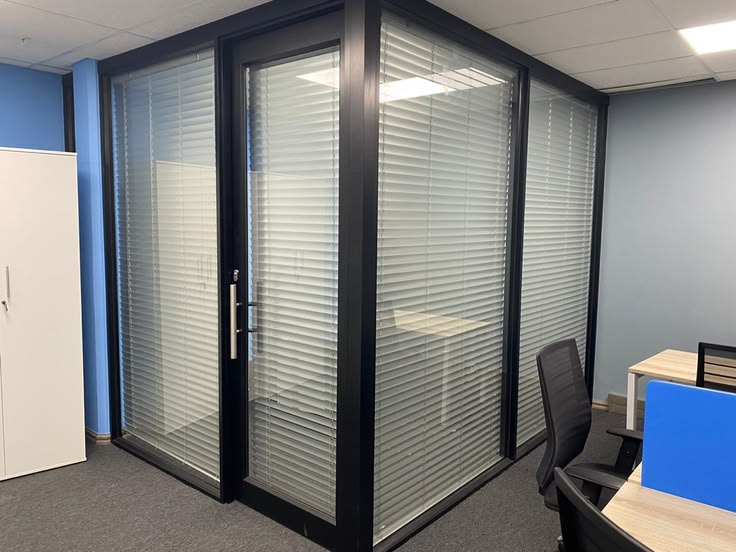
Double-glazed acoustic partitions are suitable where confidentiality and sound control are priorities but natural light and visibility remain important.
They are commonly used for:
- Boardrooms.
- Legal consultation rooms.
- Executive offices.
- Meeting rooms beside busy areas.
Indicative pricing is KES 18,000–30,000+ per m², depending on the glazing system, framing, seals and installation requirements.
The quality of the seals and installation is important. Even a well-specified glass partition may perform poorly if there are gaps around doors or at the ceiling junction.
For more information about glass partition systems, see aluminium office partitions for small offices.
4. Acoustic Wall Panels
Acoustic wall panels absorb sound reflections at seated height and improve speech clarity. They can be finished in fabric, timber or decorative panels that complement the office interior.
Consider installing panels on:
- The wall behind the presentation screen.
- Side walls opposite glass partitions.
- Walls beside the conference table.
- Areas where echo is most noticeable.
Panel placement should respond to the room’s actual acoustic conditions. Installing decorative panels without considering sound reflections may not deliver the expected improvement.
5. Carpet Flooring
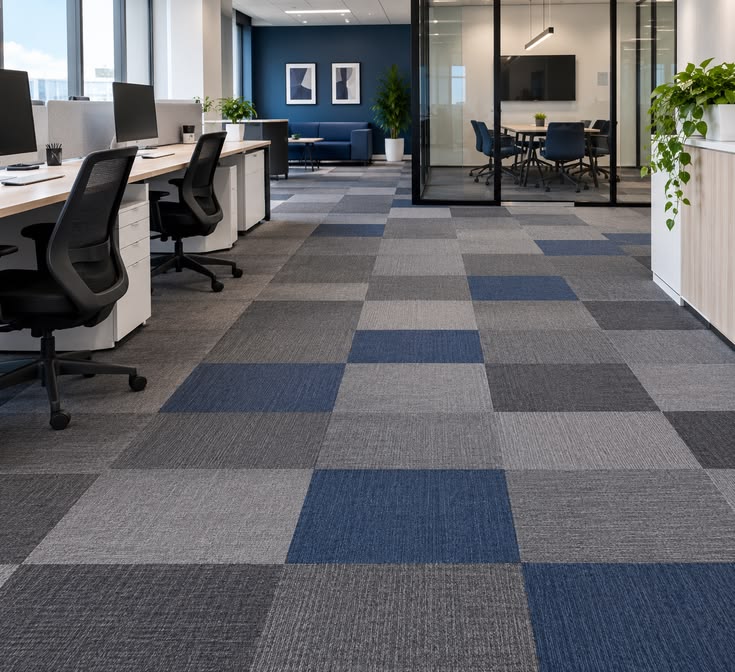
Carpet tiles and wall-to-wall carpet reduce footstep noise and sound reflections. They are particularly useful in meeting rooms with glass walls or hard flooring.
Office Interiors Kenya offers tile carpets and wall-to-wall carpets as part of its flooring solutions.
Carpet can help control internal room noise, but it does not replace acoustic insulation in the walls or doors. For more information about the available finishes, explore the company’s office interior decoration services.
6. Acoustic Doors and Seals
A partition cannot perform well if sound leaks through gaps around the door.
Use suitable door seals, drop seals where necessary, quality hardware and careful installation around door frames. The door specification should match the acoustic requirements of the room.
Also check the ceiling void, electrical openings and service penetrations. Sound can travel through these areas even when the main partition is properly constructed.
7. Combine Acoustic Solutions With Suitable Furniture
Furniture can contribute to the acoustic comfort of a meeting room. Upholstered chairs, curtains and selected soft furnishings help absorb some sound reflections.
A coordinated room design should consider the conference table, seating, presentation wall, lighting and acoustic finishes together. This is especially important in executive spaces and boardrooms.
Explore boardroom design and fit-out services when planning a complete boardroom upgrade.
Recommended Acoustic Solutions by Room Type
| Room type | Recommended acoustic approach |
|---|---|
| Small meeting room | Acoustic ceiling tiles, carpet flooring and wall panels |
| Boardroom | Acoustic gypsum or double-glazed partitions, ceiling treatment and carpet |
| Training room | Acoustic ceiling, movable partitions and soft finishes |
| HR or consultation room | Solid acoustic partition, sealed door and carpet flooring |
| Call centre | Acoustic ceiling tiles, partitions, carpet and workstation screening |
| Open-plan collaboration area | Acoustic ceiling, soft furnishings and zoning through flooring and partitions |
The appropriate combination depends on room size, the number of occupants, noise levels and privacy requirements.
Estimated Cost of Acoustic Solutions for Office Meeting Rooms
The cost of acoustic treatment depends on the room size, partition specification, ceiling system, flooring, doors and installation requirements.
For example, a small meeting room that mainly needs echo reduction may require a different treatment from a boardroom used for confidential discussions. You can also review the office partitioning cost guide when budgeting for acoustic walls and partitions.
Common Acoustic Design Mistakes to Avoid
Some acoustic problems arise because the room is designed around appearance without enough consideration for sound.
Avoid:
- Using glass partitions without considering sound privacy.
- Installing acoustic ceiling tiles while ignoring gaps around doors.
- Treating echo as though it is the same as sound transfer.
- Leaving ceiling voids untreated above partition walls.
- Selecting flooring without considering footstep noise.
- Installing decorative wall panels without considering their acoustic purpose.
- Waiting until the office is complete before addressing sound problems.
A coordinated approach is more effective than relying on a single acoustic product.
How Office Interiors Kenya Can Help
Meeting-room acoustics involve several elements, including partitions, ceilings, flooring, doors and finishes. Office Interiors Kenya provides office interior design, partitioning, ceiling and flooring solutions that can be coordinated as part of a wider office fit-out.
To learn more about the company’s work and service approach, visit the Office Interiors Kenya homepage.
Areas We Serve
Office Interiors Kenya serves businesses in Nairobi, including Westlands, Lavington, Karen, Kilimani, Kileleshwa, Runda, Muthaiga, Gigiri, Loresho, Lang’ata, Spring Valley, Lower Kabete, Ruaka, Utawala and Ruiru.
The company also receives enquiries from Mombasa, Kisumu, Nakuru, Eldoret, Naivasha, Meru, Thika and Machakos. Businesses elsewhere in Kenya and East Africa can contact the team to confirm availability and project arrangements.
Improve Your Meeting Room Acoustics
If your meeting room experiences echo, poor speech clarity or limited privacy, contact Office Interiors Kenya to discuss suitable acoustic solutions.
Call or WhatsApp 0717 044 443, 0739 255 050 or 0725 021 709, or email info@interiordesigners.co.ke.
You can also submit your project details through the contact page.
